All Regarding Court Reporting: Important Insights Into Its Value in Legislation
Court reporting offers a vital function within the legal structure, offering a exact and reputable document of proceedings. With innovative techniques and tools, stenotype reporter catch the subtleties of statements and lawful dialogue. The significance of their job extends beyond plain transcription. As the legal landscape develops, so too does the function of modern technology in court reporting. Comprehending these characteristics reveals deeper implications for justice and transparency in the lawful system.
The Duty of Court Reporters in the Legal System

Although commonly forgotten, court reporters play a necessary role in the legal system by guaranteeing a verbatim and precise record of proceedings. Their main obligation includes transcribing spoken words during trials, depositions, and other legal occasions, which offers as an official record for future reference. This documentation is essential for charms, as it offers the required details for examining choices made by discretionary.
Stenotype reporter have to have phenomenal paying attention skills and a deep understanding of legal terminology to catch the nuances of testimony and argumentation properly. Their job adds to transparency within the judicial process, permitting accountability and justness. Furthermore, they help with access to justice by making documents available to entailed celebrations, guaranteeing that everyone has the possibility to examine the procedures. In this method, court reporters promote the stability of the legal system, enhancing the value of precise communication in issues of legislation.
Techniques and Devices Made use of in Court Reporting
In court reporting, different strategies and tools boost the precision and efficiency of transcription. Stenography modern technology plays a substantial role, permitting reporters to record spoken words promptly, while digital recording methods use alternative options for documentation. Recognizing these tools is important for realizing how court press reporters satisfy their essential function in the lawful system.
Stenography Innovation Review
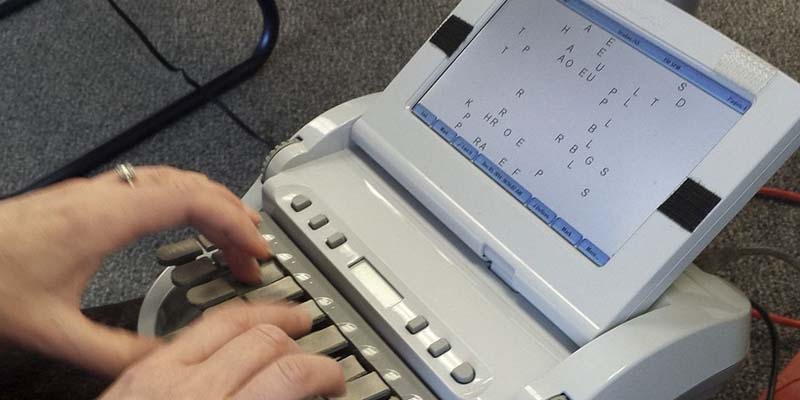
Stenography technology functions as the keystone of modern court reporting, allowing precise and reliable transcription of talked discussion. Utilizing specialized makers referred to as stenographs, court press reporters can record speech at amazing speeds, typically exceeding 200 words per minute. These makers use a distinct keyboard layout that allows numerous secrets to be pushed simultaneously, producing phonetic depictions of words - durham court reporting. This method minimizes the need for considerable punctuation and enhances transcription precision. Additionally, stenographers utilize different shorthand methods and signs to more streamline the process, guaranteeing that no detail is ignored throughout proceedings. The integration of stenography technology not only fosters effective communication in legal setups yet additionally promotes the honesty of the judicial procedure by supplying exact and dependable records of conversations
Digital Recording Methods
An increasing number of court reporting experts are turning to digital recording approaches to boost the precision and effectiveness of their transcriptions. These methods use sophisticated audio and video innovation to capture process in real-time. Digital recorders, typically paired with top notch microphones, assure that every word spoken is protected with quality. Additionally, specialized software application can transcribe audio files instantly, permitting quicker turn-around times. Some experts include dual recording systems for redundancy, ensuring no important info is shed. In addition, digital recordings can be easily indexed and browsed, helping with speedy retrieval of particular segments. As lawful environments develop, accepting these digital devices not just simplifies the reporting procedure however additionally preserves the integrity of the document.
The Relevance of Precision in Transcription
Precision in transcription is crucial in court reporting, as it assures that lawful documents mirror truth web content of procedures. This accuracy can substantially influence case outcomes, influencing the choices made by discretionary. Maintaining high standards of accuracy is paramount in the legal profession.

Precision in Lawful Records
The legal system depends greatly on eloquent debates and persuasive rhetoric, the real foundation of judicial procedures lies in the accuracy of lawful documents. Precise transcription is crucial, as it assures that every statement, ruling, and concern is recorded properly. Such accuracy offers numerous purposes, including offering a reputable referral for allure procedures and preserving the honesty of the judicial system. Mistakes in transcription can cause misunderstandings, misconceptions, and potentially destructive consequences for all celebrations entailed. Court press reporters need to possess exceptional skills and attention to information, as their job directly impacts the clearness of lawful records. Ultimately, the precision of legal records underpins the depend on placed in the judicial process, reinforcing the value of careful transcription.

Influence On Instance Outcomes
When lawful process unravel, the precision of transcription frequently dictates the trajectory of a situation's outcome. Exact court reporting assurances that every word spoken is properly caught, allowing courts, lawyers, and courts to make enlightened choices based on the document. Errors in transcription can cause misunderstandings, false impressions, and potentially unjust judgments. The integrity of lawful records counts heavily on the precision of these records, as they function as the foundation for appeals and further lawsuits. In high-stakes situations, where the implications are profound, the function of a stenotype reporter becomes much more important. As a result, maintaining extensive standards in transcription not just sustains the lawful process however likewise upholds the principles of justice and justness in the court room.
Court Reporting in Various Lawful Settings
Court reporting plays a crucial duty across various lawful setups, making sure that proceedings are accurately recorded for future recommendation. In criminal court, court press reporters transcribe testaments, evidence, and judicial rulings, which are essential for appeals and instance reviews. In civil lawsuits, precise transcripts assist in the discovery process and give a reputable document for test procedures. Additionally, management hearings often depend on stenotype reporter to keep a main document, making certain transparency and responsibility in governmental procedures. Household courts additionally profit from court reporting, as accurate documents of process can affect custodianship decisions and negotiations. Furthermore, depositions in pre-trial phases need specific recordings to record the subtleties of witness site testimonies, which might be considerable fit situation techniques. On the whole, court reporting serves as a keystone in the lawful system, fostering fairness and clearness throughout diverse judicial settings.
The Influence of Modern Technology on Court Reporting
As technology proceeds to advance, its impact on court reporting has come to be progressively significant. Technologies such as digital recording, real-time transcription software application, and fabricated knowledge have actually transformed standard methods. Digital audio recorders now capture court room procedures with exceptional clarity, enabling court reporters to concentrate on subtleties and context instead than entirely on inputting. Real-time transcription modern technologies allow instant accessibility to transcripts, promoting effectiveness and boosting cooperation among lawyers. Furthermore, expert system tools are being incorporated to help in the transcription process, lowering human error and accelerating document generation. Despite these improvements, the crucial skills of court reporters remain indispensable, as they give a nuanced understanding of legal language and court room characteristics. Ultimately, innovation matches rather than replaces the proficiency of court press reporters, making certain that the stability and accuracy of legal documents are promoted in a significantly digital landscape.
Occupation Opportunities and Pathways in Court Reporting
The evolution of modern technology in court reporting has actually opened a range of career chances for aspiring professionals in the area. Generally, stenotype reporter were largely in charge of recording legal procedures. Advancements such as digital recording and real-time reporting have increased their roles.
Today, court reporters can specialize in areas such as captioning for tv programs, giving transcription services for lawful firms, and functioning in the business field for conferences or depositions - durham court reporting. Furthermore, possibilities in remote reporting, specifically due to the rise of digital courts, have actually ended up being increasingly widespread
Educational paths consist of official training programs, qualification courses, and proceeding education and learning to remain updated with technical changes. Networking within professional and legal companies also plays a considerable duty in job advancement. Generally, the diverse possibilities in court reporting show the dynamic nature of the legal profession and the enhancing need for skilled professionals.
The Future of Court Reporting in an Evolving Legal Landscape
How will the role of court reporting adapt as the legal landscape remains to advance? As modern technology advancements, court reporting is most likely to embrace ingenious tools such as man-made intelligence and real-time transcription software. These improvements may boost precision and performance in capturing legal process. The boosting occurrence of remote hearings necessitates that court reporters end up being experienced in electronic systems, making sure smooth documents regardless of place.
Simultaneously, stenotype reporter will require to adjust their abilities to manage brand-new kinds of cases, such as those involving cyber law and intellectual residential property disputes, which need specialized expertise. In addition, the demand for instantaneous accessibility to records will press specialists to deliver quicker turn-around times without jeopardizing quality. Inevitably, the future of court reporting will certainly pivot on an equilibrium in between conventional abilities and technical combination, making certain that the integrity of the legal process remains intact in a significantly digital find this world.
Often Asked Concerns
Just How Do Stenotype Reporter Take Care Of Sensitive Information Throughout Proceedings?
What Certifications Are Required to Become a Court Press Reporter?
To become a stenotype reporter, individuals commonly require a secondary school diploma, specialized training from a recognized program, effectiveness in shorthand or voice writing, and certification or licensure, depending on state demands and guidelines.
Are Court Reporters Required to Have a Certificate?
Court press reporters are frequently needed to acquire a certificate, depending upon the territory. Licensing warranties that they meet details criteria of efficiency and professionalism, which is necessary for keeping the integrity of lawful proceedings.
Just How Do Court Reporters Take Care Of Different Accents and Dialects?
Stenotype reporter manage various accents and languages through extensive training, practice, and familiarity with different speech patterns. They commonly use specialized software and techniques to precisely record talked words, making sure clarity and accuracy in their transcripts.
What Is the Average Income for a Court Press reporter?
The ordinary wage for a stenotype reporter differs by place and experience, web normally ranging from $50,000 to $80,000 each year. In high-demand areas, salaries can go beyond $100,000, reflecting the career's importance and specialized abilities.
Commonly ignored, court reporters play an essential role in the legal system by making sure a exact and verbatim document of procedures. In criminal court, court press reporters transcribe testaments, proof, and judicial rulings, which are vital for appeals and situation reviews. Family members courts likewise profit from court reporting, as exact documentation of process can influence protection decisions and settlements. Typically, court reporters were mainly responsible for recording lawful process. Today, court reporters can specialize in locations such as captioning for television programs, providing transcription solutions for legal firms, and functioning in the corporate market for conferences or depositions.